Adventures

Showing posts with label vegetarian. Show all posts

Jun 7, 2013

Less is More: Asparagus Soup

Asparagus is one of my favorites. I can easily eat an entire bunch on my own. I keep it simple with asparagus. Its flavor is delicate and I don't want to miss it or bury it with other influences. I usually just drizzle with olive oil and hit it with salt and pepper and broil it until just tender. But I also love soup. So asparagus soup it was. And it took all of about 15 minutes. Plus, I got to use the asparagus tips in risotto later that night.
  • two bunches asparagus
  • 1 bigger than medium onion, diced
  • extra virgin olive oil
  • salt and pepper
  • splash of lemon juice
  • 1 vegetable bouillon cube
Snap the asparagus stalks where they naturally break. Chop off tips and reserve. Chop spears into little disks. In a stock pot, heat olive oil on medium high. Saute onion and asparagus for about 6-7 minutes. While asparagus is cooking, dissolve the vegetable bouillon cube in three cups boiling water.

While the asparagus is cooking you can
sauté the tips for a soup garnish. Or saute them to just eat. Or saute them for just a couple minutes because you plan to use them in risotto for dinner that night.

Add the broth to the cooking asparagus and bring to a boil, which happens really fast. Turn down heat and simmer until asparagus is just tender. Chances are good that the asparagus is already tender by the time you bring the pot to a boil. You can test a piece, carefully. Cool it off before you pop it in your mouth. Cooking too long dulls the color completely. Add salt and pepper to taste and a splash of lemon juice. Then, in small batches and carefully, ladel the soup into the food processor and blend. Each little batch I blend goes into a large bowl from which I can serve the soup or store leftovers. There is no need to return the soup to the pot because it's done. It goes from food processor to bowls. If you like, sprinkle with parmesan and/or garnish with the sauteed tips. Very simple and very delicious.

May 5, 2013

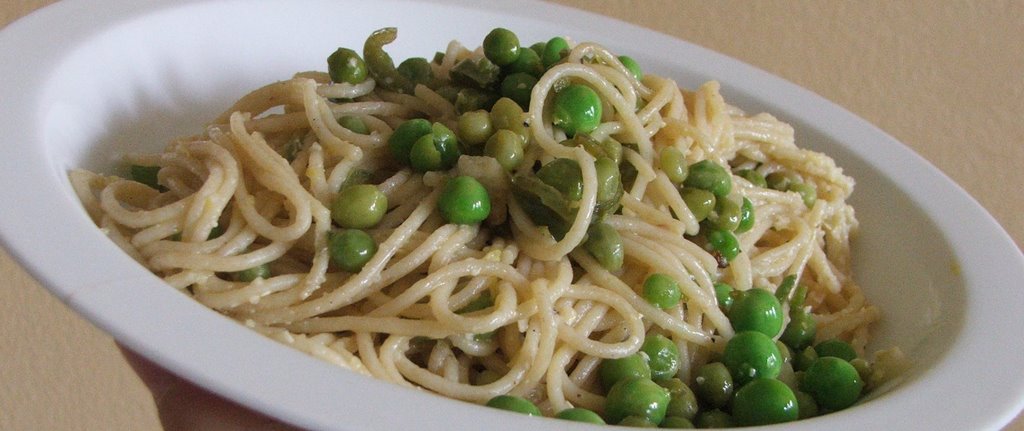
Project 238: Pasta with Peas and Lemon

This is really easy and very tasty. Can be served hot or cold. Makes good leftovers too. Serves 4


- ¾ pound dry spaghetti
- 3 tbsps olive oil, divided
- 4 medium cloves garlic, chopped or thinly sliced or just smashed - however you like it.
- 2 jalapeño peppers, seeded and thinly sliced
- Grated zest of 1 lemon
- 1 ½ cups frozen peas, thawed (better yet, use peas from your garden!)
- 1/3 cup pasta cooking water
- 4 to 5 tbsps fresh lemon juice
- 1 tsp kosher salt
- 1/8 tsp fresh ground black pepper
- 1/3 cup grated Parmesan cheese (omit for vegan/vegetarian version)
Cook your pasta according to package directions. Meanwhile, heat 2 tblsps oil in a large skillet over medium-low heat. Add garlic and jalapeños and cook until garlic is golden but not browned. Stir in lemon zest and peas. Remove from heat. Drain pasta, reserving 1/3 cup cooking water. Add pasta to peas and stir in remaining tblsp oil, lemon juice, salt and pepper. Over low heat blend; add enough cooking water to moisten. Dust with Parmesan and serve. Simple and so delicious. You could add anchovies to this or crushed red pepper.

Apr 4, 2013

Project 271 & 270: When In Romas

It's so easy you'll be roasting romas all year. Best part is, you can do this all year because it's perfect for those out-of-season tomatoes. The roasting turns mediocre fruits into sweet and addictive morsels.

There are varying methods to roasting tomatoes. Experiment and find which method works for you. However, slow and low is the core philosophy. Some folks use 200 degrees, others 250 degrees. Some let the tomatoes go for up to eight hours. I'm satisfied with between 4-6. I like to remove the seeds and pulp, others don't. 

Here is what I did:

I used between 3 1/2 - 4 pounds of roma tomatoes. I cored and halved them then removed the seeds and pulp. I peeled 4-5 cloves of garlic. I tossed everything in a large bowl with about 2 tablespoons of extra virgin olive oil, coarse salt, and freshly ground back pepper. I poured the whole mix onto my half-sheet baking pan and turned all the tomatoes hollow side down. I popped these into a pre-heated 250 degree oven and walked away.

Every hour I turned the pan because our oven is hotter in the back. Here they are after about two hours.
Almost five hours later they looked great and I was satisfied. By the way, the smell in your house is amazing.You could roast these for the aromatherapeutic benefits alone. I'm not sure aromatherapeutic is a word, but it is when you roast tomoatoes. I removed them from the oven and let them cool. I ate several before I could package them. You can freeze these or you can cover with olive oil and keep in the refrigerator for about two weeks. I doubt they will last that long. We use them on toast, on pasta, in eggs, in hummus, on salad, in paella, on a fork, in our hand, on a sandwich...I could do this all day.

Apr 2, 2013

Project 272: Bhutanese Red Rice


This short grain rice variety from Bhutan is nutty and chewy and so tasty. You can get it bulk at Whole Foods or your local co-op or natural food store. It cooks in 20 minutes. Use it for pilafs, salads, stuffings, vegetarian burger ingredient, anything you can think of.

1.5 Cups Bhutanese Red Rice, rinsed in cold water
1/2 of one large red onion, diced
1/2 of one large carrot, diced
1 heaping tablespoon chopped garlic
1 heaping tablespoon chopped ginger
vegetable boullion cube dissolved in 14 oz. boiling water *

* Now, the water to rice ratio for this rice indicates 1.5 cups of water to each cup of rice. However, I used just 14 oz. of water and it was plenty. In fact, I think it took a bit too long to absorb the fluid. I can't explain it. I'm just passing along my findings.

As is often the case, I've got no set recipe for this. Cooking often depends on what's on hand and/or what needs to be used. Today I had onions, carrots, garlic, ginger, cilantro and scallions. So here's what I did.

I rinsed the rice in cold water and set aside. In a deep frying pan with a lid I cooked the onion and carrot until it began to color. I then added the garlic and ginger and cooked for about a minute. Next in went the rice. I stirred the rice to mix in with the already cooking ingredients. I then added the liquid, brought to a boil, covered, lowered the heat, and let simmer until done. The rice retains a chewiness. Just before serving, sprinkle with scallions and cilantro.

Mar 19, 2013

Project 285-284: Roasted Pepper and White Bean Soup

Soup is still a dish we crave because the weather is still chilly and damp. It might be late March but a bowl of soup is not entirely out of season. Because I roasted a bunch of very large peppers yesterday, making this soup was quick. You can use canned roasted peppers but I just prefer the taste of the ones I roast myself. They really taste, well, roasted.

In my food processor I blended three large, yellow roasted peppers, half a 4 oz. can of roasted green chiles, and half a 15 oz. can of cannellini beans.

I sauteed a chopped sweet onion and two cloves of garlic in a tablespoon of olive oil. I added salt, freshly ground cumin seed, smoked paprika and freshly ground black pepper and cooked until the onions colored a bit.

I then added the cooked onions to the food processor and added vegetable broth until I had the consistency I wanted. I don't mind texture in my soup and I don't mind some pepper seeds so the food processor is my tool of choice. Use the blender of you prefer. Strain it too, if you like.

I garnished the soup with sliced cherry tomatoes. Cilantro would be nice. A dollop of sour cream perhaps or strained yogurt (now marketed as "Greek yogurt"). Don't forget a hunk of crusty bread.

Mar 13, 2013

Project 290: Roasted Ceci Beans

Most people know ceci beans as chickpeas or garbanzo beans. Growing up in my Italian family, ceci beans was the only term we ever used. Pronounced CHEE-gee or CHAY-gee by my relatives, the g is soft like in George. Ceci beans are one of my favorite foods and I'm always looking for excuses to eat them.

Over the last couple of years I've come across several Internet recipes for roasting them and all are basically the same; toss the ceci beans with oil and salt and any other of your favorites spices then roast until they are as brown and as crisp as you like. Easy.

For this batch I took one can of ceci beans, drained, rinsed, drained again and patted dry while the oven heated to 350 degrees. I used a tablespoon of extra virgin olive oil, sea salt, homemade sambar powder, and homemade garam masala and tossed to coat. I poured these out onto a rimmed cookie sheet and roasted for about 45 minutes. A couple of times I removed the cookie sheet and shook it a bit to let the ceci roll around before I returned it to the oven.

This snack is very versatile and you are only limited by your imagination of herb and spice combinations. Great to take on hikes. Makes a great party snack. Best part is that cegi beans are wonderfully healthy. Make some soon and let me know what flavor combinations you use.

Feb 11, 2011

Almost Raw Sprouted Wheat Berry-Lentil Bread

I call this almost raw because I used our old dehydrator to make it and it doesn't have a temperature control. I can't claim to know how hot the food gets. However, it's a raw-inspired bread because of the ingredients and the spirit in which I "cooked" it - using a dehydrator. I'm creating true raw recipes in our new dehydrator - see the end of this post.

For this bread I used sprouted wheat berries and lentils. The wheat is from
Jospeh's Grainery located in the Palouse. A Joseph family member was in attendance at the ifbc - International Food Blogger Conference and was passing out bags of wheat berries and lentils. Lucky me.Sprouting is easy and does not require any special (and plastic) equipment. I use wide-mouth, quart-sized canning jars, a piece of cheese cloth, and a rubber band. To make this almost raw bread I soaked about a heaping cup of lentils and wheat berries in separate bowls in lots of water. I let these soak overnight. The next day I drained, rinsed, and drained each, covered the jars with a thin layer of cheesecloth and fastened the cloth with a rubber band. I set the jars way back on the counter in a dark corner. Twice a day I removed the cheesecloth, rinsed the contents, and drained out as much water as I could before I returned the lentils/wheat berries to the jars. In two days l had a sprout frenzy.

Here is what I put in my almost raw bread:

3 1/2 cups sprouted wheat berries
3 1/2 cups sprouted lentils
2 Roma tomatoes, chopped
1 small yellow summer squash, chopped
1 cup ground flax seed
1/3 cup chopped onion
1 clove garlic
1/3 cup (packed) fresh Italian flat leaf parsely
2 tbsp olive oil
2 tbsp tamari
salt and pepper
garlic powder
dried basil
dried oregano
I processed all of these ingredients in the food processor, adding the ground flax seed last. I then tasted and seasoned and re-seasoned. The final dough is wet and gloppy. I used a large serving spoon to spread the mix onto the dehydrator trays, which I had covered with parchment paper. I rubbed a bit of olive oil onto the parchment too. I left the dough relatively thick because it will loose density as it dries. I dehydrated this for about 7 hours, then flipped the bread and removed the parchment paper to allow the other side to dry for another hour or so. How long you dehydrate is up to you.

I like this bread, though It's not as savory as I had hoped. But that's on me since I made this up. I like the texture very much. It's soft yet it has a bit of a "crust" for some tooth. As much as I like sprouted lentils, I'm not so crazy about them in this recipe. I will make plenty more raw bread but not include the lentils. No biggie.
I'm really enjoying playing with these raw bread recipes. At the same time, I'm thinking about using almost the same ingredients in a traditional baked bread.

In regard to the dehydrator, the mother of all dehydrators, the Excalibur, has since arrived and it's da bomb. It's the machine I see 9 out of 10 raw foodists using in videos and blogs. I purchased it straight from the manufacturer. Yes, made in America. Cool, huh? Replacement parts available. I got a smaller model, five trays, and opted for the model with a timer. And, it came with lots of extras AND no shipping AND no tax. We will use it for so many things we just can't do with the machine we have now. Stay tuned for more about the machine and what I create.

Dec 26, 2010

No-Knead Olive and Garlic Loaf

Christmas Eve we went to V & G's for homemade mushroom lasagna and rum cake and to hang out with the foster kitties and, in general, have a good time. We were in charge of bringing bread and champagne. For the bread I was inspired to use a little bit of rye flour, like I used in the No-Knead Swedish Limpa recipe. I had recently made the Limpa so I had the rye flour. It won't last forever so I'm thinking of breads to make with it.

I thought the Limpa flour combo would be great for a hearty and crusty loaf dotted with olives and roasted garlic. A good companion bread for earthy mushrooms. I used a combination of white bread flour, whole wheat flour, and rye. For the olives I used one of my favorites, the oil-cured, wrinkled black olives that have such a fruity taste. For convenience, I bought roasted garlic from the olive bar and gave it a rough chop. I thought the mellow roasted flavor would round out the fruitiness and saltiness of the olives. For a bit of color and to bring the whole recipe together, some chopped fresh rosemary. Before baking, I dusted the top of the slashed loaves with more rosemary and coarse salt. The bread was amazing. It was crusty, it was packed with fruity olive goodness and sweet garlic and the burst of salt on the tongue in every bite. I used half the recipe for a large loaf to bring to dinner and split the remaining recipe into two small loaves for us at home.

Here is what I used. The special addition items I didn't measure but I've given you pretty close approximate amounts.

3 cups lukewarm water
1-1/2 tablespoons granulated yeast (1-1/2 packets)
1-1/2 tablespoons kosher salt
2 tsp sugar
1 cup rye flour
3 cups unbleached bread flour
2
-1/2 whole wheat flour
cornmeal for dusting the peel
1/ - 3/4 cups black oil-cured olives, pitted and chopped
1/3 cup roasted garlic cloves, chopped
1 1/2 tbs chopped fresh rosemary

Combine yeast and sugar with the water in a very large bowl. I proof my yeast first, you don't have to. I just really like to know it's alive and kicking before I bother to continue.

While the yeast is proofing, combine the flours and salt.

Using a wooden spoon, rubber spatula, or large spoon, combine the yeast mixture with the dry ingredients until just combined then add the olives, garlic and rosemary. Continue to combine the mixture until there are no more dry spots.
Remember, it's going to be wet and sticky but that's perfect.

Yes, you could also do this using a food processor with dough attachment or a stand mixer fitted with a dough hook. I've never used my food processor to make dough and I don't have a stand mixer. I prefer my hands when making bread. I like to feel the dough. How else can I tell if it's too wet or too dry or needs more kneading? The no-knead method is the farthest away I get from using my hands when making bread.

Cover to bowl with plastic wrap and let the dough rest until dough rises and collapses back on itself, about 2 hours. The dough can be used at this point but will be sticky to handle. I put it in the refrigerator for a couple more hours before using. Then again, you can let it go overnight. Ultimately, you can keep this dough mixture in the refrigerator for at least a week. Keep in mind the longer you keep it, the more sour and yeasty it becomes, like sourdough. We are not fans of that flavor at all so I make a whole batch of no-knead dough when I know I will use it all.

When you are ready to make some bread, dust the top of the dough mix with a little flour to help the knife avoid sticking. Flour your hands too. Grab a grapefruit-sized blob of dough and cut from the mix with a serrated knife.

Quickly shape the blob into a loaf by stretching the surface of dough around the bottom on all four sides. Dust with more flour if needed. Let the dough rest on a pizza peel dusted with cornmeal for 40 minutes. You can cover with a dry, floured towel if you like.

Twenty minutes before baking (or however long it takes your oven to come to temperature), preheat oven to 400 degrees F. Place an empty shallow pan on the floor of the oven and your baking stone on the middle rack. This is also when you score the bread with a razor or very sharp knife. Score, gently, slash marks or a cross (keep the cross small because they really expand), etc.

To bake - pour 1 cup hot water into the shallow pan to create a burst of steam. Please be careful! Then right away slide the loaf (loaves) from the peel onto the stone. Bake for 40 minutes, or until golden brown and firm. You might have to turn the loaf half way. I always have to do this because our oven is hotter in the back.

Now the hardest part - COOL COMPLETELY BEFORE SLICING.

Nov 26, 2010

Pumpkin Coconut Curry

The weather outside is frightful but pumpkin coconut curry is so delightful. If you've no reason to roll, grab a bowl, grab a bowl, grab a bowl.

Wow, OK, got the bad puns out of my system for now. To fight the chill we are experiencing in our own private ice-land in West Seattle, I made a warm, spicy, and fragrant pumpkin curry.
Our favorite Thai place, Buddha Ruksa, has a delicious prawn and pumpkin curry. I've been meaning to replicate it at home. While surfing the web I stumbled onto Martha Stewart's Curried Coconut-Pumpkin Stew. Taking inspiration from each dish, I created my own pumpkin curry, creamy with coconut milk, spicy with ginger and jalapeno, and fragrant with freshly ground and whole spices.Here is what you need:

* 2 tablespoons olive oil
* 1 teaspoon black mustard seeds
* 1 teaspoon whole cumin seeds
* 1 cardamon pod, smashed
* 1 teaspoon turmeric
* 1 onion, finely diced
* 4 cloves garlic, minced
* 1 jalapeno pepper, ribs and seeds removed, finely chopped
* 2 teaspoons minced fresh ginger
* 1 rounded teaspoon curry powder
* 1 rounded teaspoon coriander powder
* 2 1/2- 3 cups peeled, cubed pumpkin
* 1 14 oz. can coconut milk (you can use light coconut milk)
* 1 cup milk, any kind, or even water
* 1 pound extra-firm tofu, cut into 1-inch cubes
* 1 tablespoon freshly squeezed lime juice
* Salt and pepper to taste
* 1/4 cup fresh cilantro leaves

(This bowl is sad. It's empty.)
Here is what you do:

Use a big, heavy pot and heat the oil over medium-high heat. Just when the oil begins to shimmer, add mustard seeds, cumin seeds and cardamon pod. When the seeds start to sputter, add onion, garlic, jalapeno, and ginger and saute until fragrant, stirring a few times, about 2 minutes.

Add coriander and curry powder and pumpkin and stir. Cook for a couple minutes. Stir in the milks and bring to a boil. As soon as it boils, lower the heat to simmer and cover the pot. Continue to cook for about 15 minutes. Check to see if more liquid is needed. If so, you can use more of either milk or even water.

Then add the tofu and simmer about 10 minutes, uncovered, until pumpkin is tender.

Add the lime juice, taste and season for salt . You can add cilantro to the whole pot or just garnish individual bowls. Kick up the spice with your favorite hot sauce. Temper the existing spice with a side of cool plain yogurt.

You could serve this with any rice or grain or just enjoy a bowlful of curry. It was warm, spicy, and filling.

Nov 9, 2010

White Bean and Cucumber Salad

I love beans. So delicious. So versatile. So good for me. Just because the weather is wet and cold doesn't mean salads disappear from our table. I make them year-round. I can have one ready in minutes while soup is warming or while bread is toasting. They usually taste better the next day and they are perfect to bring to work.

2 cans white beans, rinsed and drained
1 cucumber, peeled or not, sliced
1 roasted red pepper, diced
1 clove garlic, smashed and minced
3 tablespoons chopped parsely
extra virgin olive oil
juice of a lemon
kosher salt, to taste
freshly ground black pepper, to taste

Combine all ingredients. Mix well. Eat. Go play.

Nov 1, 2009

Wait No More

Wow, where did the time go? Our summer flew by and we filled it to the brim. And we are recently back from two weeks in Turkey. I will be posting some shots of some of the fabulous food we ate while traveling. I will also be working on some Turkish-inspired dishes for future posts. In the meantime, let's continue where we left off, waiting for tomatoes.No more waiting. End of season tomatoes came our way via E & B. I didn't have enough energy today for canning but I did spend a fair amount of time turning all of these tomatoes, in varying degrees of ripeness, into salas - lots of it. I diced all of these tomatoes then added half a white onion - diced, two large cloves of garlic - minced, two jalapenos - seeded and diced, one bunch cilantro - chopped, about a cup of frozen corn, one can of black beans (rinsed and drained), the juice of a small lime, salt to taste, about two tablespoons of olive oil, and sugar. Yeah, I know, I don't like putting sugar in things but these tomatoes were so very acidic it was painful. So a little sugar helped cut that bite.I got two quarts, a pint, and a little bit. We'll be eating salsa all week but it's really tasty.

Mar 3, 2009

Roasted Winter Squash

The calendar says March but some nights it still feels like the dead of winter. Winter squash is a great comfort food on a cold night. Warm, flavorful, buttery in texture and filling. All of the savory aromas fill the kitchen as it warms from the oven.
There are no shortage of winter squash varieties but I tend to cook them all in the same manner. It's so easy and the results so to my liking. Carefully halve or quarter the squash, scoop out the seeds, rub with olive oil and season at will. Make it sweet, savory, spicy or a combo of all. I roast the pieces skin side up at 350 for as long as it takes for the squash to become tender. I like the slow and low method. Once the squash is tender you can eat from the wedge with a spoon or scoop out the good stuff for your plate. Enjoy.

Feb 4, 2009

Red & White Quinoa Pilaf

If you haven't tried quinoa (KEEN-wa) please go get some. It's not a grain but the seed of a type of Goosefoot plant. We're talking lots of protein, fiber, and iron, to name just a few health essentials. Let's thank the Incas for revering this edible seed.

Despite the fact that it is not a grain, quinoa cooks up much like rice. Use two cups of water to one cup of quinoa. Bring to a boil, reduce the heat then simmer about 15 minutes. Cooked quinoa still has a bit of tooth. Fluff it with a fork and you're done. You can also cook quinoa by adding it to soups and stews like you would rice, barley, pasta, etc. Some folks advise to rinse the quinoa prior to cooking in order to be sure to remove any bitter residue. I've rinsed and I've not rinsed and I honestly can't taste a difference.

In regard to the question of gluten, I'm not at all well-versed in gluten-free foods and I've no dietary restrictions on gluten, but everything I've read about quinoa seems to agree that it is considered "gluten free." The information I've read does indicate, however, that people could have gluten issues when the quinoa is processed into other products like flakes or pastas. This might be due more to contamination issues with the processing rather than the quinoa itself. Please do your research on the quinoa products you intend to eat if you are allergic to gluten.

I buy quinoa in bulk and I usually buy equal amounts of regular (white) and red. I love to combine them. I can't tell a difference in taste but I love the color combo. To make the pilaf pictured above, I cooked a mixed cup of red and white quinoa, fluffed with a fork and set aside. While the quinoa was cooking I quickly diced (pretty tiny) half a zucchini, half a carrot, and an onion. I also chopped 2 cloves of garlic and a handful of fresh parsely. In a large non-stick skillet I heated a tablespoon of olive oil over medium-high heat. When the oil was hot I added all of the ingredients to the pan except the parsely. I stirred and tossed and cooked this veggie mix for ten minutes or so. Seasoned with salt and pepper, a dash of cumin and a dash of homemade garam masala and I was finished. I added the cooked quinoa and the parsely to the skillet and tossed until everything was combined. Serve this hot or as a salad.

Oct 22, 2008

Green Tomato-Apple Chutney

B's tomato plants did great but he still had lots and lots of green tomatoes when all was said and done. The first batch I received turned into delicious green tomato apple salsa. We ate it so fast there was no time for photos.

The second batch became Green Tomato and Apple Chutney. The recipe, adapted from the Ball Blue Book Guide To Home Canning, Freezing & Dehydration, Volume 1, assumes you are using red tomatoes but green is fine to use. The apples I used were Honeycrisp because those are our favorites. As for vinegar, please read the label and make sure that the acidity is 5%. I've seen 4% on the store shelves and this isn't acidic enough for water-bath canning use.

Canning is easy but time-consuming. The bulk of your time making the chutney will be in the chopping. However, you cook this so long that the pieces break-down a good deal. So use the food processor to give everything a rough chop. This really cut my time (no pun intended, however appropriate). The rest of the time is waiting for the mixture to cook down and thicken. Filling, topping and boiling jars is the least labor-intensive part of the entire process.What I used:

2 1/2 quarts chopped, cored green tomatoes
1 quart peeled, cored, chopped apples
2 cups chopped peeled and seeded cucumber
1 1/2 cups chopped onion
1 1/2 cups chopped red bell pepper
1 1/2 cups raisins
3 1/2 cups brown sugar
4 cloves garlic, minced
1 large jalapeno pepper, half-seeded, finely chopped
1 tablespoon chopped fresh ginger
1 teaspoon salt
1 teaspoon cinnamon
2 cups white vinegar
1 cup apple cider vinegar

Combine all ingredients in a large saucepot. Cook slowly until thick, about 1/1/2-2 hours. As mixture thickens, stir frequently to prevent sticking. Ladle hot chutney into hot jars, leaving 1/4 inch headspace. Adjust two-piece caps. Process 10 minutes in a boiling water canner. This batch made 14 1/2 pints. There was at least another 1/2 pint remaining but we wanted some to eat immediately. Put it on everything. I love condiments and consider them almost an entree. So this chutney has been on roasted pepper sandwiches, toast, eggs, rice, turkey meatloaf, etc. It's got zip from the chili and zing from the vinegar. Delicious!

Oct 12, 2008

Extra Chunky, Super Fast, Amazingly Delicious Tomato Avocado Salad for Grow Your Own #18

This was a quick and delicious lunch. I knew I was hungry and I knew I didn't have the patience for something too involved. But I also knew that I wanted something I made myself, at home, so I knew what went into it and it would be healthy. The tomatoes in this salad (about a third of which are in this photo) represent almost our entire harvest. We are done wondering what went wrong. We're thinking of next year and watching our fall garden sprout.

Chop some tomatoes. Chop an avacado. Chop a jalapeno. Chop some cilantro. Squeeze half a lime over it all. Sprinkle with salt. Toss. Eat. Sigh satisfyingly.
This is my entry for Grow Your Own#18 hosted by Maria at A Scientist In The Kitchen.

Oct 9, 2008

Roasted Salsa Verde

I was in a local market gathering ingredients for mole but the tomatillos caught my eye. Mole would take a good part of the day to create but I could have fresh salsa verde in about 20 minutes. More on the mole later, let's concentrate on the salsa. It's quite easy. Roasting the ingredients adds a whole new dimension. It's the same when I make vegetable soups - I roast the veggies first. Boiling or steaming veggies for soup just leaves me, I don't know, wanting more. More substance, more flavor, more depth. It's the same with this salsa.

I took my inspiration from
Rick Bayless who has several recipes for roasted salsas. This one is often reproduced. I used jalapeños instead of serranos and only one. I roasted all of the veggies together rather than roasting the onions separately. And I pulse everything together in the food processor rather than in separate some things like he does.

1 lb. tomatillos, husks removed
1 large jalapeño (seeded or not, depends on your heat tolerance)
3-4 garlic cloves, unpeeled 1 large white onion, chopped into 4-6 pieces
handful of cilantrosalt, to taste
sugar, optional and to taste


I put the whole tomatillos, unpeeled garlic cloves, j
alapeño, and onion wedges in a roasting pan and set it under the broiler on the second closest rack to the heat. I let these broil until dark blotches appeared on the tomatillos. Keep an eye on the jalapeño(s). They roast quickly. Chances are you will have to remove these first. I've had a few jalapeños basically dissolve because I roasted them too long.

Once dark spots appear, take a pair of tongs and turn over everything and continue broiling a few more minutes until some color appears on the veggies. Remove the pan form the oven and let the items cool.

Once the items are cool enough to handle, peel the garlic, remove the skin (and seeds and veins, if necessary) from the
jalapeño, and remove the skin from the tomatillos. Now, the insides of a tomatillo is a gelatinous blob of mostly seeds and some pulp. The core of the tomatillos will give you some trouble so you can either core them before broiling or just take a paring knife and cut around it as you remove the skin. I now combine all the roasted ingredients, plus the cilantro and some salt, in a food processor and pulse a few times. I like my salsa verde not smooth but not chunky. Taste and re-salt, if needed. This last time I added a sprinkling of sugar to take the edge off of the tangy tomatillos. Eat immediately. It will keep a few days in the refrigerator but why wait? Put it on eggs, on tortilla chips, over rice, on top of grilled or baked fish, dip into it with grilled shrimp, add a couple of spoonfuls to chile, etc. You get the idea.

Sep 8, 2008

Canning Salsa

I enjoy canning. Time consuming but not difficult. Results in homemade deliciousness. Leaves you with a sense of accomplishment. I consider it meditation time. Felt like meditating one day last week and created a batch of salsa. Just a small batch, seven half-pints. Pretty tasty. The cat didn't help but she was curious. Who else is canning? What are you making?

(For the record, the cat doesn't get onto the table or the counters. I set these jars on the floor to take advantage of the warming glow of the sun.)

Sep 2, 2008

Sprouting Chickpeas

Another batch of sprouts is under way. First step, a long soak. Must have patience.

Sep 1, 2008

JAM SESSION

This holiday weekend we made peach jam and peach pies. Canning is labor-intensive but we really enjoy it. To us, the time and effort is worth it, considering the results.

Six homemade peach pies
7 half-pints peach-peño jam
7 half-pints peach jam
14 half-pints peach-ginger jam
As the week continues I've got plans of more canning projects including tomatoes, salsa, and roasted red peppers.

Aug 26, 2008

Urad Dal Roti

I'm amazed at the various roti/paratha recipes I see on the web. So many creative ways to incorporate a wide variety of ingredients. Now that I have the hang of making roti/parathas, I'm experimenting now and then with new versions. As I suspected, I had leftover urad dal. Not to worry. It's easy to incorporate leftover dal of any kind into warm and savory roti or stuffed parathas. You get your protein and your arbs in one bite!

I put my cup of leftover urad dal in the food processor with about two tablespoons of water, ground cumin, chopped cilantro, salt and a couple teaspoons each of two homemade spice blends - sambar powder and garam masala. I blended this until it all stuck to the sides of the bowl. I didn't need it to be a puree but I didn't want the individual pieces of dal in my roti.

In a mixing bowl I added atta a little at a time to the dal until I had a soft "dough" that wasn't too sticky. I used 3/4 cup of atta before I reached a consistency that felt right. I coated the dough with a few drops of oil and let it rest for about 15 minutes.

I then sectioned the dough into 6 portions that I rolled into balls. Keep extra atta on hand for dusting. Onto a flat surface I rolled out the dough (dusting as needed) into relatively thin rounds about six inches across. I heated my non-stick skillet to medium-high heat. Once the pan was hot, I placed a rolled-out roti in the center and let it sit. In about a minute, look for it to change color around the underside edges and you will see little puffs forming in various places. Flip the roti and continue cooking. Sprinkle a tiny amount of oil over the surface and spread with the back of a spoon.

Flip again and you will see that the roti has darkened in color and hot spots have formed. I add another tiny dribble of oil at this point. From here I continue to cook and flip until the roti get to the color you see in the photo. Cool these on a wire rack for a couple of minutes then eat right away.
What will be the next addition to my roti/paratha?

LinkWithin

Related Posts with Thumbnails